How to Become a Certified Registered Nurse Anesthetist (CRNA) 

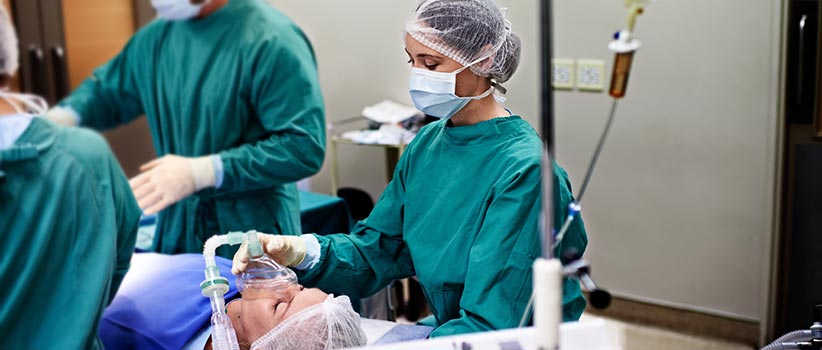
A certified registered nurse anesthetist (CRNA) is a highly skilled advanced practice nurse who is licensed and certified to administer anesthesia. CRNAs are found in a range of practice settings, including hospitals, outpatient surgery centers, dental offices, pain management centers, and public health centers. Requirements to become a nurse anesthetist include a graduate education, clinical practice, and certification.

4 Steps to Become a Nurse Anesthetist (CRNA)

We review some common steps to become a certified registered nurse anesthetist below. Depending on your specific pathway, these may change.

1. Become a Registered Nurse

Nurses who want to become a CRNA must be licensed and practice as a registered nurse in a U.S. state or territory. To become a registered nurse, you may need to complete an approved registered nursing education program and pass the NCLEX-RN exam. 

You may choose to complete an approved nursing program, an associate degree, a Bachelor of Science in Nursing (BSN), or a Master of Science in Nursing (MSN). Requirements for RN licensure will vary by state

2. Apply to a CRNA Program

CRNA programs are accredited by the Council on Accreditation of Nurse Anesthesia Educational Programs (COA). In addition to RN licensure and practice requirements, common entrance requirements include a GPA of 3.0 or above and a combined score of 300 or more on the Graduate Record Examination (GRE). Be sure to check the programs you’re interested in for exact entrance requirements.

The length of CRNA programs varies depending on the institution offering them. Online CRNA programs may offer students flexible schedules and the ability to participate in live classroom discussions. The online programs are held to the same accreditation standards as the on-campus programs.

3. Apply for the National Certification Examination (NCE) from the National Board of Certification and Recertification for Nurse Anesthetists (NBCRNA)

The certification exam’s primary function is to ensure that nurse anesthetists have the knowledge and skills to practice safely and effectively. It also protects the value of the CRNA credential. Students can sign up to take the Self-Evaluation Examination during their educational program to gauge their progress and prepare for the National Certification Examination. After the initial exam, CRNAs must take the Continued Professional Certification Exam every four years.

NBCRNA certification is required in all states to use the title “nurse anesthetist,” according to the American Association of Nurse Anesthetists.

4. Apply for CRNA Licensure in Your State of Practice

CRNAs are licensed to practice in all 50 states and the District of Columbia. In many states, CRNAs are classified as advanced practice registered nurses and must be licensed by the relevant state licensing authority. Check the nursing licensing requirements in your state.

Pathways to Become a Certified Registered Nurse Anesthetist (CRNA)

There are multiple routes to pursue a career as a CRNA, with varying degree programs and certifications. The starting point is earning your RN license and gaining practical experience.

Master of Science in Nursing (MSN)

A master’s in nursing may help prepare you to become an advanced practice registered nurse (APRN). Online MSN programs are available and may allow you to attend school while working.

Sponsored online nursing programs

Simmons University

info

Master of Science in Nursing (MSN)

Earn an MSN online from Simmons University. Choose from two program options — FNP or PMHNP — and prepare to raise the standard of patient care.

  • Choose from two program options — FNP or PMHNP
  • Complete in as few as 24 months
  • Full-time and part-time tracks available

Georgetown University

info

Master of Science in Nursing

Nursing@Georgetown delivers Georgetown University’s MS in Nursing program online, preparing RNs with a BSN to pursue certification in an APRN specialty. Students can earn their degree in as few as 23 months. 

  • Earn your MS in Nursing in as few as 23 months
  • Choose from one of four APRN specialty areas: AG-ACNP, FNP, NM/WHNP, or WHNP
  • Gain hands-on clinical experience in evidence-based practice

St. John Fisher University

info

Master of Science in Nursing

Earn an M.S. in Nursing online at the Wegmans School of Nursing. Bachelor’s in nursing and RN license-required. 

  • Part-time and accelerated tracks available
  • Four program options: PCFNP, PMHNP, AGACNP, AGPCNP

info SPONSORED

RN to MSN

The RN to MSN program route is for people who have an associate or bachelor’s degree and are practicing RNs. Some applicants may need to complete prerequisite courses before entering the MSN program. The program will also require clinical experience.

Post-Grad Certificate

The Post-Master’s Certificate is for those who have a master’s degree or doctorate in another area of nursing but want to become a CRNA.

Doctor of Nursing Practice

The Doctor of Nursing Practice (DNP) is a terminal degree focused on practice-based clinical nursing. A DNP program prepares professionals for advanced roles in clinical research and for executive positions in the healthcare industry. DNP programs usually take two to five years to complete, depending on your level of education when you start. 

All students who matriculate into an accredited program must be enrolled in a doctoral program, according to the American Association of Nurse Anesthetists (AANA).

BSN to DNP

You can become an advanced practice nurse through a BSN-to-DNP program. The DNP is a terminal degree focused on evidence-based practice that prepares you for leadership roles in improving patient care quality and outcomes. The BSN to DNP route allows students to earn an MSN degree via a pathway to earning their DNP. A typical BSN-to-DNP program takes 3 to 4 years and may require more than 1,000 clinical hours.

What Is a Nurse Anesthetist?

CRNAs are advanced practice nurses with a graduate-level education who work without physician supervision in many states, according to the AANA Fact Sheet on CRNAs. They provide access to safe, high-quality, cost-effective anesthesia and related services to meet the community’s needs. CRNAs shoulder heavy responsibility and practice with a high degree of autonomy and professional respect. CRNAs may move into research and leadership positions that use their specialized knowledge and skills.

All CRNAs are board-certified by the NBCRNA.

Should I Become a Nurse Anesthetist?

Becoming a CRNA takes considerable time, depending on your career path. However, the job outlook is good, with 35% more nurse anesthetists projected between 2024 and 2034, according to the Bureau of Labor Statistics (BLS). The growth is due to increased demand for healthcare and preventive care, according to the BLS.

Apart from job growth and availability, CRNAs are known as the primary anesthesia professionals in many rural hospitals. They work in many settings, from simple to complex, including pre-operative surgery, delivery rooms, dental offices, and more.

Salary

Compensation for a CRNA will vary by location and the institution for which they work. According to the BLS page on Nurse Anesthetists, the mean hourly wage in 2024 was $111.39, with a mean annual salary of $231,700. The highest salaries are found in medical and diagnostic laboratories, with a mean annual salary of $302,810. Here are the five states where CRNAs had the highest salaries:

StateCRNA Annual Mean Wage
Massachusetts
$292,390
Washington
$276,110
Vermont
$272,180
Alaska
$268,970
New Jersey
$268,310

Roles and Responsibilities

CRNAs administer various types of anesthesia to patients of all ages in any healthcare setting. Nurse anesthetists deliver comprehensive care using all accepted anesthetic techniques, including general, regional, sedation, loca,l and pain management. CRNAs also provide consultation and implement respiratory and ventilator care, and identify and manage emergencies. They provide a range of clinical support services outside the operating room.

According to the AANA CRNA Scope of Practice, a CRNA may provide:

  • Patient care before, during and after surgery
  • Patient care before, during and after labor and delivery
  • Diagnostic and therapeutic procedures
  • Trauma stabilization and critical care interventions
  • Acute and chronic pain management
  • Management of systems and personnel that support these activities

Certified Registered Nurse Anesthetist (CRNA) Certification

Nursing certification and nursing licensure are two different processes that CRNAs must navigate. State boards of nursing or other relevant agencies manage licensure. CRNA certification, administered by NBCRNA, indicates compliance with the professional practice standards for this clinical nursing specialty.

Information below is current as of October 2025. Be sure to check with the NBCRNA for the most up-to-date information.

National Board of Certification and Recertification for Nurse Anesthetists (NBCRNA)

National Certification Examination
Eligibility Requirements: Active unrestricted RN license, completion of an accredited nurse anesthesia education program and granted eligibility status to take the NCE.
Fee: $1,285

Continued Professional Certification Assessment (CPCA)

CPC Assessment
Renewal: The assessment must be taken every four years.
Eligibility Requirements: Active CRNA certification
Fees: $295

Certified Registered Nurse Anesthetist (CRNA) Resources

Related Advanced Practice Registered Nursing (APRN) Careers

Certified Nurse Midwife (CNM)

Certified nurse-midwives focus on women’s health, including pregnancy and postpartum care. The first step to becoming a CNM is to become a registered nurse by completing an approved nursing education program. Then a graduate-level midwifery program may help prepare you for taking the Certified Midwifery Exam. Like the CRNA, the CNM program is an advanced practice program that prepares a nurse to go beyond primary care delivery.

Clinical Nurse Specialist (CNS)

This advanced practice registered nurse role requires practicing as an RN, completing a master’s degree in nursing and certification to become a clinical nurse specialist. A CNS specializes in an area of practice, such as adults, pediatrics, oncology, cardiology or pain management. The CNS is a consultant and coaches other staff members in clinical practice.

Nurse Practitioner

A nurse practitioner is an RN who has earned a master’s in nursing degree or a doctoral degree from a nurse practitioner program and is certified by an approved national licensing body. Often RNs advance their careers with additional education and focus on one of a variety of specialty care areas. It’s a broad-based practice area as opposed to the specialty focus of the CRNA path.

Nurse Educator

nurse educator combines clinical experience and academic training to prepare current and future generations of nurses. Educators teach at different levels, from vocational to graduate-level coursework and clinical experience. Educators typically focus on courses that align with the clinical experience. Nurse educators help prepare CRNAs for their careers.

FAQs

How long is the school program to become a nurse anesthetist?

Nurse anesthesia programs range from 24 to 51 months, depending on the institution. Programs include clinical settings and experiences.

Overall, CRNAs achieve seven to eight years of education, training and work experience. Starting January 1, 2022, all CRNA students have to be enrolled in a doctorate rather than a master’s level program, according to the AANA Fact Sheet on CRNAs.

What does a nurse anesthetist do?

A nurse anesthetic administers anesthesia to render a patient wholly or partially unconscious so another healthcare practitioner can perform surgery or other procedures. CRNAs are also involved in pain management and specific techniques such as intubation and are called on to consult by other providers.

Where does a nurse anesthetist work?

You can find a nurse anesthetist in any setting that requires anesthesia, such as a surgical or obstetrical suite, outpatient surgery centers, with dentists, ophthalmologists, plastic surgeons and the U.S. military, and at Department of Veterans Administration healthcare facilities.

Is becoming a CRNA worth it?

The CRNA path differs from that of many other nursing careers because there is less patient contact and less day-to-day patient care. However, it can be a rewarding career in terms of compensation and the opportunity to engage in challenging, exciting work.

For 23 years in a row, nursing has been identified as the most honest and ethical profession in a recent Gallup poll, the AANA reported.

What is the difference between a CRNA and a CPAN?

A CRNA and a Certified Post Anesthesia Nurse (CPAN) deal with patients at different points in their healthcare experience. The CRNA will interact with the patient before administering anesthesia and monitor the patient during the procedure. When the procedure is complete and the patient begins to recover from anesthesia, they are moved to the post-anesthesia care unit (PACU) or recovery area. There, the CPAN monitors the patient’s condition as they regain consciousness from the anesthesia.

Information last updated October 2025.